
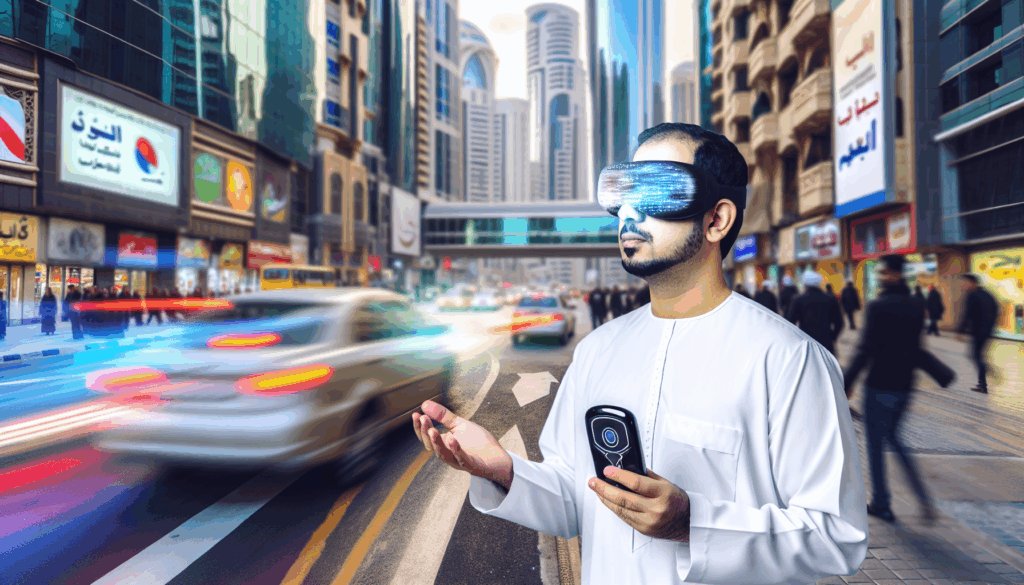
How AI is Revolutionizing Accessibility for Blind
“Siri, remind me tomorrow.” Or, “Alexa, play music.” Sound familiar? Those statements or commands are common place nowadays as AI has improved by leaps and bounds to make our lives much easier. However, in addition to that, think of a world where this technology not only simplifies tasks but also empowers individuals to overcome barriers. This is the transformative power of AI in accessibility for blind. As AI continues to evolve, it plays a pivotal role in enhancing the lives of blind and visually impaired individuals, making the world more inclusive and navigable. But how exactly is AI making this possible?
What is AI?
Artificial intelligence, often called AI, is a type of technology that gives machines the ability to think and behave in ways that used to be exclusive to humans. This includes things like learning from experience, understanding language, solving problems, making decisions, and even showing a touch of creativity. It is what allows your phone to transcribe your voice notes, your email to filter out spam, and your maps app to predict the fastest route home even when the traffic is a nightmare. Devices and software powered by AI are not just following a script—they are picking up on patterns, learning from new data, and adjusting their behavior accordingly. In many cases, AI systems are capable of operating independently, taking over tasks that once required human judgment and attention. While they do not think quite like we do, they can perform complex cognitive tasks at incredible speed and scale. Whether it is a smart assistant setting your appointments or a diagnostic tool helping doctors spot early signs of illness, AI is increasingly becoming woven into the background of modern life, quietly doing the thinking while we get on with our day.
The Current Landscape of AI in Accessibility for Blind
Today, AI smart tools are doing more than just reading screens, they are opening doors, leveling playing fields, and quietly changing life for blind and visually impaired people. What used to be daily frustrations—like figuring out which canned food is in your hand or reading handwritten notes, are now easily solved with a smartphone and the right app.
Before you even download a single app, your smartphone already comes with some serious brains built in. Both iPhones and Androids are packed with features that make life a whole lot smoother for blind and visually impaired users, no extra setup needed. If one needs to type a message, dictation turns your voice into text faster than your fingers ever could. Want to snap a selfie? Your phone will actually tell you if your face is centered. Even the camera gets clever—automatically describing what’s in view, whether it is “a tree in the distance” or “a person smiling indoors.” Siri and Google Assistant also deserve a shoutout. These voice assistants can call a friend, set reminders, find directions, or even tell you the weather—without you lifting a finger. It is like having a personal assistant who never sleeps, never sighs, and always listens. For many blind persons, these native tools are not just features, they are freedom, packed into a pocket-sized device.
AI allows for the creation of many assistive technology apps for the blind. Be My Eyes, for instance, lets visually impaired users connect with sighted volunteers in seconds through a live video call, and now, thanks to its AI-powered feature called Virtual Volunteer or “Be My AI,” users can also get instant assistance from an advanced image recognition system, no human needed. Want to know if your socks match? Someone or the AI is there to tell you. Envision AI goes even further, turning the camera into a set of intelligent eyes that can read signs, identify objects, and even tell you who just walked into the room.
It does not stop at just convenience though. These tools are pushing into deeper parts of life, education, employment, and personal fulfillment. If a visually impaired person needs help with printed lecture notes, apps like Seeing AI or Voice Dream Reader can read them aloud in a matter of seconds. Seeing AI can even read handwritten notes, identify money and colours!
Trying to land a job? Visual resume builders, screen reader-compatible platforms, and even AI-driven job coaching services are helping blind candidates compete on equal ground. In the workplace, OCR tools scan printed documents instantly, while smart assistants schedule meetings, write emails, and take notes during Zoom calls.
At home, these technologies mean cooking without guesswork, reading mail without asking for help, or shopping online without stumbling through inaccessible menus. They empower people to raise families, run businesses, and pursue hobbies once thought impractical without sight.
AI even makes life more accessible and comfortable for blind and visually impaired persons indirectly. Consider a teacher who uses AI to create accessible lesson plans, ensuring that all students, regardless of their visual ability, can participate fully. The ripple effect of such technology extends beyond the individual, fostering an environment of inclusivity and understanding.
Moreover, AI-driven platforms are enabling more personalized experiences. For instance, apps that learn user preferences can tailor content delivery, making interactions smoother and more intuitive. This adaptability is crucial in education and professional settings, where quick access to information can make a significant difference.
ore than anything, artificial intelligence helps to return control to individuals with vision loss. When you can do things yourself, on your own schedule, in your own way, it builds confidence, self-respect, and the kind of independence at which disability often tries to chip away. These tools are not just changing how blind people live. They are changing how blind people thrive—in classrooms, at jobs, in relationships, and in society.
Emerging AI Technologies and Innovations
The future of AI in accessibility for blind is bright, with innovations on the horizon that promise even greater breakthroughs. Advancements in image recognition technology are set to revolutionize navigation aids, offering real-time guidance through complex environments. Imagine an AI system that can describe surroundings, identify obstacles, and suggest the safest path forward. Some of these apps do already exist to assist blind people, but their improvements could transform urban mobility, making cities more accessible for everyone.
However, with these advancements come ethical considerations. How do we ensure that AI technologies respect privacy and provide equitable access? These questions are crucial as we move forward. The Digital Learning Institute emphasizes the importance of inclusive design and ethical AI development, ensuring that these tools serve all users fairly. Discussions around data privacy, consent, and algorithmic bias are more important than ever. By addressing these issues head-on, we can build trust and ensure that AI remains a force for good.
Emerging technologies also bring the promise of more immersive experiences. Virtual reality (VR) and augmented reality (AR) are being integrated with AI to create environments where visually impaired users can practice daily tasks or explore new places in a controlled, safe manner. This not only enhances learning opportunities but also boosts confidence in real-world scenarios.
The Future of AI and Accessibility
Looking ahead, AI’s role in accessibility is poised to expand even further. Over the next decade, we can expect AI to become more personalized, adapting to individual needs and preferences. This evolution will be driven by collaboration between tech developers and the visually impaired community, ensuring that solutions are both innovative and practical.
Inclusive design will be at the forefront of these developments, emphasizing the need for technology that is accessible to everyone. By fostering partnerships and encouraging feedback from users, we can create tools that truly enhance the quality of life for visually impaired individuals. Consider the potential of AI in healthcare, where personalized assistive devices could monitor health metrics and provide timely alerts, allowing for more independent living.
At BlindAccessibilityTips.com, we are committed to supporting this journey of blind and visually impaired persons learning to use digital technology, especially the Windows computer. Our Downloadables section offers a free bundle to help you learn and harness the power of the computer. Whether you’re looking to improve your skills or explore new tools, we provide the guidance you need. Our community-driven approach ensures that we stay attuned to the real-world needs of our users, making our resources relevant and impactful.
Conclusion
AI is not just a tool; it’s a bridge to a more inclusive world. As we embrace these technological advancements, we must remain committed to ethical practices and user-centered design. By working together, we can ensure that AI continues to empower and uplift the visually impaired community.
Have a thought? Let us know in the comments below. For more insights and resources, visit our Windows Computer (PC) page, where we delve into using assistive tools effectively. And don’t forget to explore our Home page for an overview of our mission and offerings.